



Creating livelihoods from rattan and bamboo weaving
Rattan and bamboo weaving is a traditional craft with a long-standing connection to the lives of the people, serving both daily needs and providing a stable source of income for many families. In communes such as Nà Tấu, Mường Ảng, Na Sang, and Mường Chà, most of the elderly, and even young people, know how to weave. Bamboo, nứa, vầu (a large type of bamboo), and rattan are familiar materials from the mountain forests that, through the skillful hands of the people, become intimate items in daily life. Sometimes it’s a basket for carrying rice, a flat winnowing basket, a colander, or a tray.
.png)
With nearly 50 years dedicated to rattan and bamboo weaving, Mr. Quàng Văn Hặc, from Nà Tấu village, Nà Tấu commune, still weaves regularly every day, preserving the traditional craft. His eyes lit up with pride as he spoke of the craft to which he has dedicated his entire life. He recounted: “In the old days, weaving was the livelihood for the whole village. The young men would go into the forest to collect rattan, while the elderly and women stayed home to weave. Thanks to this craft, many families in the village had food to eat and clothes to wear...”
According to Mr. Hặc, in the past, the products mainly served daily life, and their economic value was not high. In recent years, as the trend of using environmentally-friendly products has spread, woven rattan and bamboo products have found a new standing. Many cooperative groups and production facilities have been formed, linking up with businesses both inside and outside the province to bring their products to market.
In Na Sang commune, the rattan and bamboo weaving craft is being maintained and developed. The entire commune now has dozens of households practicing the craft, concentrated in villages such as Co Đứa, Na Sang 1, and Na Sang 2. Ms. Lò Thị Đon from Co Đứa village shared: “As a handicraft product, customers like it because it’s durable, beautiful, and environmentally friendly. That’s why we now have buyers coming directly to us, and the products we make are sold regularly. Some months, I can sell several dozen flat baskets, regular baskets, and trays. Many households in the village also practice the craft, providing work during the off-season and earning extra income. We no longer have to worry about our products going unsold like before...”
Thanks to the expansion of the market, many families have been able to maintain the craft and earn a stable additional income. On average, households practicing the craft can earn from a few hundred thousand to several million of VND per month, depending on the quantity and type of product. The price varies by product, ranging from VND 10,000 to VND 400,000. However, some more special products, like a rattan dining tray, can be sold for VND 1.2 - 1.5 million.
.jpg)
Preserving and promoting identity
With the cultural, economic, and social values that the rattan and bamboo weaving craft brings, in June 2025, the weaving technique of the Thái people in Điện Biên province was recognized by the Ministry of Culture, Sports and Tourism as a national intangible cultural heritage under Decision No. 1659/QĐ-BVHTTDL dated June 3, 2025.
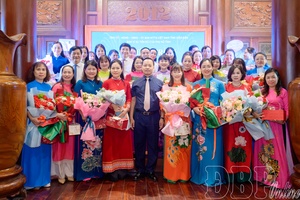
This past October 9, at the Nà Tấu commune People’s Committee, authorized by the Ministry of Culture, Sports and Tourism, leaders from the Department of Culture, Sports and Tourism awarded the Certificate of National Intangible Cultural Heritage for the “Rattan and Bamboo Weaving Technique of the Thái People in Điện Biên province” to representatives of the government and people of 31 communes and wards. This is a great honor and source of pride for the Thái people, and it affirms the value of this traditional craft and ethnic cultural identity in the modern world.
After being honored as a national intangible cultural heritage, the rattan and bamboo weaving craft of the Thái people in Điện Biên seems to have been infused with new vitality. Many households and artisans are not only excited and proud but are also actively maintaining and innovating in their production.
.jpg)
Expressing his joy at the special event, Mr. Quàng Văn Hặc from Nà Tấu village shared: “Being recognized by the State as a heritage gives us even more motivation to preserve the craft. The biggest wish of our people is to have a stable market for our products and for the younger generation to learn the craft so that the technique of rattan and bamboo weaving is not lost but lives on in the new life of the people.”
With the pride that has followed the recognition of the weaving technique as a national intangible cultural heritage, the party committees and authorities of the communes are now guiding people to invest time and effort in creating more sophisticated products. They are combining modern designs with traditional patterns, turning familiar items into distinctive souvenirs of the Điện Biên region. This will help the rattan and bamboo weaving craft target the tourism market, expand the market for its products, and create more sustainable livelihoods for the people.
Mr. Trần Quang Trung, Chairman of the Nà Tấu commune People’s Committee, emphasized: “The rattan and bamboo weaving craft provides income for the people and contributes to preserving the cultural identity of the Thái ethnic group. After being recognized as a national intangible cultural heritage, the commune will coordinate with professional agencies to open classes to pass on the craft, support product promotion, and encourage people to develop the craft in connection with community-based tourism. The goal is to make woven rattan and bamboo a truly distinctive local product.”
Quang Long
.jpg)
.jpg)
.jpg)
.jpg)

.jpg)
.jpg)
.jpg)


.jpg)
.jpg)
.jpg)
You have 500/500 characters left
Please enter 5 or more characters!!!